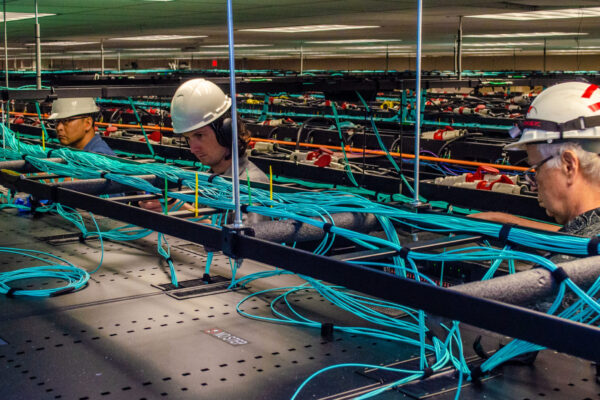
In metal powder bed manufacturing, the feedstock is part of the process rather than a passive input. Particle characteristics and the way powder spreads can influence the layer presented to the machine. Understanding that behaviour helps connect material preparation with the consistency of the finished part.
Measurements need to describe the properties relevant to the intended process. A single average particle size cannot express every feature of a powder population. Distribution, shape and handling history can raise different questions, while test methods need to be understood before results from different suppliers or laboratories are compared.
Records become useful when material moves through repeated handling steps. Storage, transfer and any reuse arrangement should remain connected to the batch history. Without that context, a change in production behaviour may be difficult to investigate even when machine settings appear unchanged.
The broader lesson is that repeatable manufacturing depends on controlling the relationship between material and process. Equipment capability alone cannot explain every outcome. Careful characterisation, consistent handling and a clear record of what entered the build help engineers examine variation and decide which part of the production system needs attention.











Collaboratively administrate empowered markets via plug-and-play networks. Dynamically procrastinate B2C users after installed base benefits. Dramatically visualize customer directed convergence without
Collaboratively administrate empowered markets via plug-and-play networks. Dynamically procrastinate B2C users after installed base benefits. Dramatically visualize customer directed convergence without revolutionary ROI.


Global Insight Nexus (GIN) is a forward-thinking news platform dedicated to connecting the world with insightful perspectives. Through comprehensive reporting, in-depth analysis, and global coverage, GIN empowers readers with knowledge to navigate the complexities of our ever-changing world.