Over the past decade, the global architecture industry has been undergoing a profound digital transition. Particularly in the design of Skyscrapers and large-scale mixed-use complexes, traditional two-dimensional drafting methods can no longer meet the needs of increasingly large project scales and increasingly intricate collaboration chains. Faced with a technical system involving multiple disciplines—including structural engineering, MEP, and curtain wall systems—the industry urgently requires a more efficient, traceable, and collaborative technological pathway. Against this backdrop, Chinese new-generation architect Rong Ma, through the development of A Parametric Management System for Building Cluster Configurations Based on BIM Process Optimization V1.0, has proposed a future-oriented systematic solution. His achievements has been validated through multiple mega-projects and has offered the industry a collaborative paradigm that is discussable and replicable.
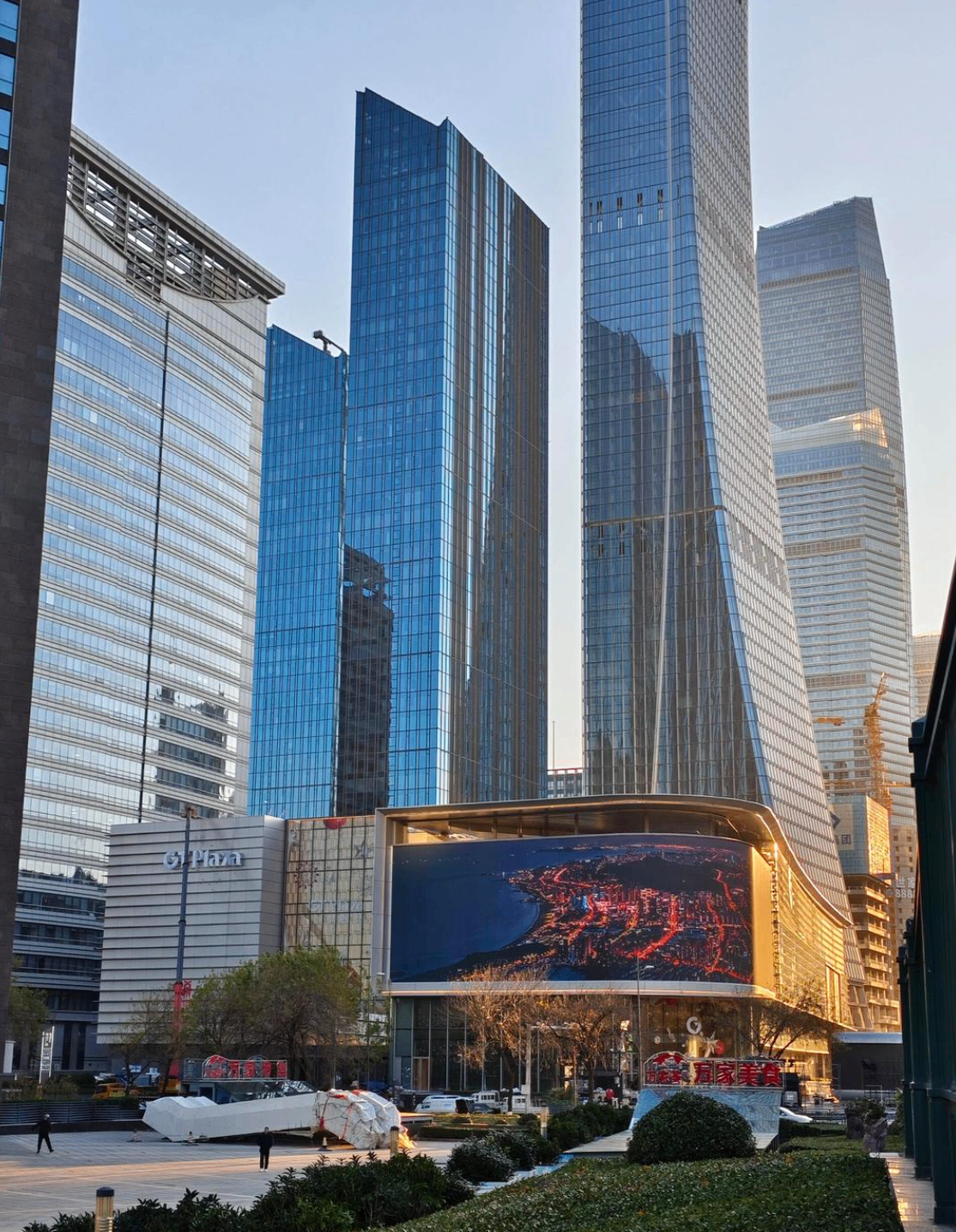
In Qingdao, China, a 327-meter Skyscraper—GT PLAZA—is rising along the coastline. As an essential component of the city’s ongoing urban renewal, the building not only accommodates a mix of commercial, office, hotel, and metro-overbuild retail programs but also spans hundreds of meters and dozens of floors in its structural system. In this project, Rong Ma not only served as a core deepening-design architect but also carried out the first comprehensive deployment of A Parametric Management System for Building Cluster Configurations Based on BIM Process Optimization V1.0.
The core of this system lies in integrating the full workflow—from building model creation, core-tube positioning, and component-parameter updates to automated drawing output—through a parametric family-file system, cross-disciplinary information-interface specifications, and batch-capable collaborative scripts. Particularly during the construction-documentation phase of GT PLAZA, the complexity created by extensive MEP systems, structural transfer floors, and the mixed conditions of hotel and office functions made cross-disciplinary accuracy a crucial variable in project delivery. Through the coordination of Revit, Navisworks, and Dynamo, Rong Ma’s system reduced cumulative errors stemming from repeated modeling by different disciplines and provided a responsive model foundation for design modifications. In the later project stages, internal teams continued using the coordination procedures established by Rong Ma at multiple milestones, further validating the system’s stability and practical value.
Meanwhile, the 350-meter Skyscraper in the South Taihu New City of Huzhou, Zhejiang—another major project in which Rong Ma participated—became an important testing ground for expanding the system’s application. As the central landmark of the regional CBD, the project’s technical complexity was in no way inferior to that of GT PLAZA: the curved geometric system of the tower crown, the multi-level structural system of the hotel public areas, and the parametric control required for the large-scale curtain wall all demanded a higher level of modeling precision.
In this project, Rong Ma carried out targeted optimizations to A Parametric Management System for Building Cluster Configurations Based on BIM Process Optimization V1.0, integrating workflows such as the segmentation logic of curved curtain walls in Skyscrapers, column positioning along the perimeter of the core tube, and parametric processes for area calculations and component quantities into a unified framework. Building on insights gained from GT PLAZA, Rong Ma further strengthened the coordination mechanisms between architectural and structural disciplines, allowing the model to be used in real time for structural–MEP coordination, clear-height verification, and quantity analysis. Through a phased-output strategy, the design team was able to identify potential conflict points early in the rapidly iterating concept stage, significantly reducing rework costs in subsequent detailed-design phases.
In Hangzhou, another 250-meter residential tower—the Hangzhou West Station North Parcel Residential Tower—became a key project for standardizing the system. Unlike the previous two towers, where the structural systems were highly customized, this project emphasized precise control of repetitive elements such as typical-floor modules, vertical circulation systems, and equipment-room layouts, making it ideal for verifying the system’s scalability.
For this project, Rong Ma established a more mature three-stage “Parameterization – Collaboration – Documentation” structure. In the first stage, parametric scripts were used to generate floor outlines, area statistics, and component relationships in batch. In the second stage, cross-disciplinary model checks were conducted in Revit with structural and MEP teams. In the third stage, batch-processing scripts were used to generate drawings, views, numbering, and annotations, ensuring a highly consistent drawing output.
The establishment of this workflow enabled the project team to accomplish a significantly larger workload with fewer personnel and provided a replicable template for other internal projects within the company. At this point, Rong Ma’s BIM achievements had evolved from a localized set of techniques into a collaborative framework that could be systematically promoted throughout the organization.
Industry observers have noted that Rong Ma’s contributions extend beyond the technical domain. The value of A Parametric Management System for Building Cluster Configurations Based on BIM Process Optimization V1.0 lies in reorganizing multiple traditionally fragmented technical steps into a more logical, open, and reusable structure, thus helping architectural design firms transition from “project-driven collaboration” to “system-driven collaboration.” In the field of Skyscraper design, this capability is particularly rare.With ongoing advances in digital construction, smart job sites, and lifecycle building management, the value of models has extended far beyond construction documentation into construction, operation, and maintenance. Rong Ma’s system constructs the foundational model logic required for this future.
From Qingdao to Huzhou to Hangzhou, the three projects reflect the new role being shaped by China’s new generation of architects amid the digital wave: they are not only designers but also system builders; they focus not only on architectural form and spatial experience but also on how information can flow more efficiently throughout a project.
The design of Skyscrapers is shifting from experience-driven to data-driven and system-driven processes. Rong Ma’s work demonstrates that breakthroughs often come from reconstructing underlying logic. As the industry continues to ask how collaboration can be improved, how design conflicts can be reduced, and how models can truly serve the entire project lifecycle, his answer is a system-based achievements—validated through multiple landmark projects—that connects multiple disciplines.
Such a contribution comes not only from technical expertise but also from a deep understanding of the industry. As domestic and international projects continue to advance, the system proposed by Rong Ma is expected to play a role in more diverse contexts, offering a new technological pathway for the development of Skyscrapers and large-scale mixed-use complexes.









Collaboratively administrate empowered markets via plug-and-play networks. Dynamically procrastinate B2C users after installed base benefits. Dramatically visualize customer directed convergence without
Collaboratively administrate empowered markets via plug-and-play networks. Dynamically procrastinate B2C users after installed base benefits. Dramatically visualize customer directed convergence without revolutionary ROI.

Global Insight Nexus (GIN) is a forward-thinking news platform dedicated to connecting the world with insightful perspectives. Through comprehensive reporting, in-depth analysis, and global coverage, GIN empowers readers with knowledge to navigate the complexities of our ever-changing world.